Review: Jonathan Tepper’s “Shooting Up”
by Miles Raymer
Disclosure: I received a free copy of this book from the author in exchange for an honest review.
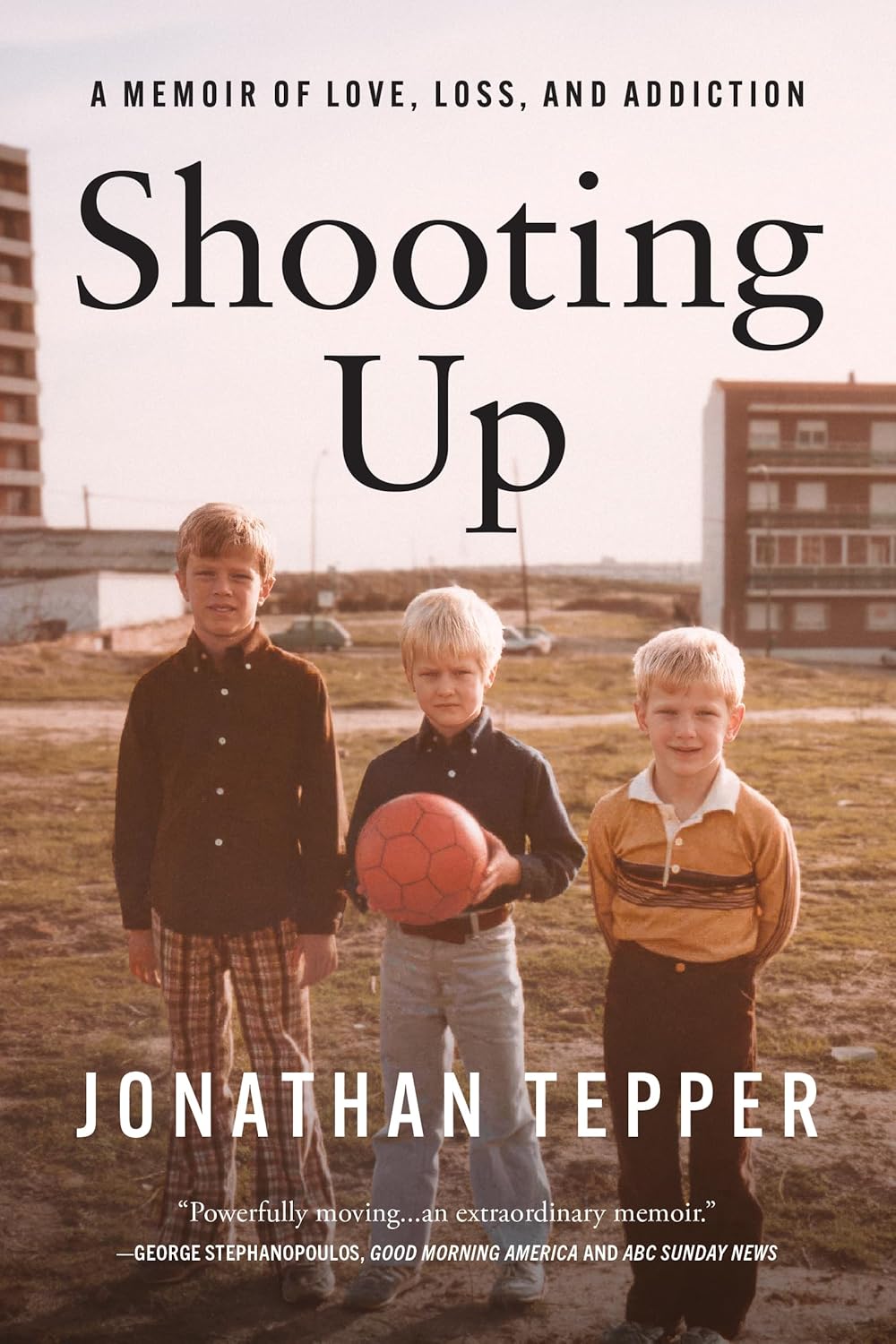
Jonathan Tepper’s Shooting Up is a memoir of Tepper’s boyhood, adolescence, and early adulthood. Tepper’s parents were American missionaries who traveled to Spain in the 1980s and founded a small drug rehabilitation community that eventually expanded and became Betel International. Tepper and his brothers grew up surrounded by poverty and addiction, and spent their youth watching many of their beloved family friends die horrible deaths during the early years of the HIV/AIDS crisis. They were also surrounded by the most authentic forms of love and faith, as well as a stalwart dedication to learning and reverence for the process of education. These factors formed a crucible of psychosocial and intellectual development that few young people experience, one well deserving of a memoir.
My response to the opening scenes of Shooting Up was lukewarm. Tepper’s memories seemed to trickle along without much momentum, the chapters reading like he had tossed a bunch of old family photos on the floor and arranged them into somewhat random groupings. Despite his early and intimate exposure to human hardship, many aspects of Tepper’s boyhood seemed too idyllic, lacking the tensions that usually drive a good memoir. I began to conclude that Shooting Up would be unremarkable, a story perhaps worth telling but not well told. As I continued to read, however, I was delighted to find that my initial impressions failed to grasp the full arc of Tepper’s narrative. The almost-too-perfect childhood was the setup, merely the stage on which an intensely dramatic performance would play out.
Though Tepper gained agency and expertise as he matured, his primary role was that of witness, witness to tremendous courage and suffering. His adolescence was marked by a repeating cycle of meeting reformed drug addicts, learning to love them like brothers and sisters, and then watching them slowly waste away and die from AIDS. Tepper writes with tenderness about watching former addicts rediscover dignity by embracing Betel’s ethos of mending broken things, which applied to furniture, cars, buildings, and human souls alike. In this way, Shooting Up represents a heroic attempt to immortalize––or at least extend––the forgotten lives of common people whose deaths arrived prematurely. There was also a major tragedy within Tepper’s family that shifted the memoir’s tone into an even deeper examination of how loss and grief impacted his formative years.
The book ended with Tepper’s ascension to the highest echelons of academia as he became a Rhodes Scholar. This was around the time the HIV/AIDS crisis began to abate due to the advent of the famous “cocktail” of drugs that transformed the disease from a death sentence into a manageable condition. Ultimately, Tepper reveals himself to be the rarest of elites, one who enjoys the privilege of a truly world-class intellect but who also knows the cruelties of poverty, the darkness of addiction, the power of redemption, and the value of service to the less fortunate.
Tepper leaves the reader with an impression of greatness tempered by genuine humility and appreciation for humanity’s cooperative spirit. “We don’t do it alone,” he writes. “It is our family the friends who give us the tools to become ourselves…As my mother said, the answer is always more love. It is the love of family, of friends, and even the love of learning that changes the world around us, and most importantly transforms us. It is love that makes us who we are and makes us whole” (259-60).
Thanks for the honest review which did make me interested in reading this book, I will take with me to my voluntary work the image of mending broken things, maybe something I could suggest we introduce as part of the way we support addicts in our organisation.
Hi Frances and thanks for this comment! I’m glad you took something away from my review that you can use in your volunteering. Best of luck out there! 🙂