Review: Daniel Mason’s “North Woods”
by Miles Raymer
In my early twenties, I fell in love with The Wire, a gritty crime drama that I still consider to be my all-time favorite TV show. One can interpret The Wire as an attempt to capture a particular place and time––in this case, Baltimore in the 2000s. The show has a sprawling cast, but a careful viewer may conclude that Baltimore is truly the “main character.” This idea comes through most clearly in the show’s opening credits, where fleeting moments of daily life in Baltimore are sequenced in a fashion that’s intimate but also depersonalized. The city becomes its own gestalt, something more than the mere sum of its infrastructure and inhabitants.
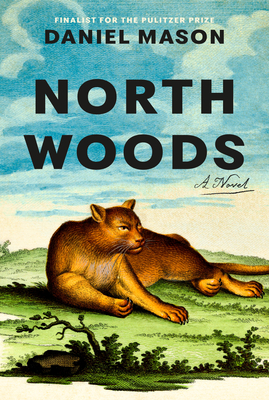
Daniel Mason’s North Woods is a captivating and elegant spin on this “place-as-protagonist” style of narrative. Set in the mountains of western Massachusetts, the novel opens on a remote plot of land and the people who seek refuge there during the American colonial period. Mason then jumps forward in time with each chapter, revealing how subsequent generations occupy the land and a house that is built on it. As the story proceeds, the reader experiences four centuries of American history as viewed from a single, anchored position in space.
It’s a great idea for a novel, and wonderfully executed. Mason’s prose is deft; he successfully mimics a myriad of writing styles to authentically fit each time period, all the while managing to keep the book cohesive enough to feel like a single, unified story. His detailed knowledge of New England’s flora and fauna is peppered beautifully throughout the various human dramas. And each new narrative is compelling and psychologically sophisticated, with references to the previous characters or events artfully woven in. The result is one of those rare novels that feels both deeply humanistic and ecological, reminding readers that, of course, there is no separation between ourselves and the natural world that holds us.
Without saying too much, I’ll note that there’s also a lovely element of fantasy––or perhaps magical realism––haunting the pages of North Woods. It’s something of a ghost story, but not in a way that bends to the typical conventions of that genre. This aspect could easily have annoyed me if it weren’t so cleverly integrated into the larger story. Mason’s ghostly mystery plays a critical role in bringing about the novel’s surprising and satisfying conclusion.
I’ll end with a line from the book’s final pages that arrested me with its simple wisdom: “The only way to understand the world as something other than a tale of loss is to see it as a tale of change” (368). I’m entering a stage of life where I am called to contemplate and confront loss more than ever before, so this quote reached me at a perfect moment. I’ll do my best to carry this framing along with me as my own “tale of change” continues to unfold.